Review: Retro 80s Heart Sunglasses Design
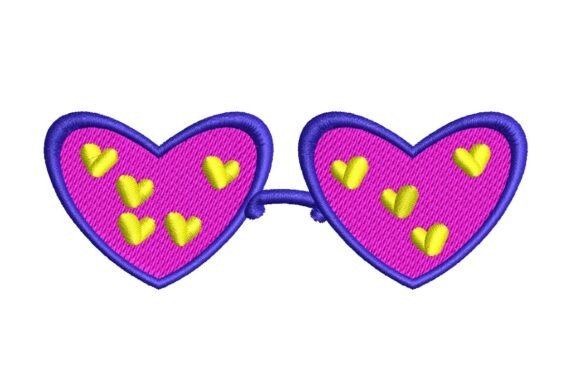
As a designer who spends half my life digitizing and the other half stitching, I have learned that not every machine embroidery design looks as good on screen as it does in the hoop. When I first pulled up the Retro 80s Heart-Shaped Sunglasses Embroidery Design, I was immediately struck by its bold personality. It is not just a graphic; it is a mood. The vibrant pink magenta lenses and cool blue frames scream nostalgia, capturing that specific, high-energy aesthetic of the 1980s that is currently having a massive resurgence in fashion and home decor.
But aesthetics are only half the battle. The real question for any serious crafter or Etsy seller is functionality. How does this design behave under the needle? Does it hold up on textured fabrics? Is it suitable for commercial use? I evaluated this piece with a critical eye, imagining it not just as a digital file, but as a tangible part of a finished product.
First Impressions and Visual Impact
The layout of this design is compact yet impactful. The heart shape provides a natural focal point, while the sunglasses add a layer of whimsical detail that prevents the motif from feeling too generic. For those of us in the craft business, visual recognition is key. This design has strong silhouette value, meaning it remains identifiable even from a distance. This is crucial for items like tote bags or sweatshirts where the embroidery might be viewed across a room.
The color palette suggested in the preview—vibrant pinks and blues—is inherently cheerful. However, as an experienced reviewer, I always advise testing different thread colors. While the default look is perfect for summer vibes, swapping the lenses for red or the frames for black could transform this into a versatile year-round asset. The design relies heavily on solid fills, which means the quality of your thread and the tension of your machine will play a significant role in the final appearance.
Real-World Application: The Tote Bag Test
To truly understand the potential of this embroidery file, I mentally placed it on a canvas tote bag. This is a popular item for small shop products and holiday gifts. The design’s width seems ideal for the center of a standard tote, offering enough presence without overwhelming the fabric. Because the shapes are relatively large and open, it avoids the puckering issues often associated with dense, tiny details on thin materials.
Beyond totes, this design shines in custom apparel. Imagine it stitched onto the chest pocket of a denim jacket or the front of a white crewneck sweatshirt. The retro vibe pairs exceptionally well with vintage-washed garments. For baby embroidery projects, such as a onesie or a nursery pillow cover, the playful nature of the heart-shaped glasses makes it a hit. Parents love personalized, fun motifs that aren't overly serious. However, when scaling down for smaller items, one must be cautious about the integrity of the lens details.
Performance on Different Fabrics
Fabric texture is the silent killer of many embroidery projects. This design performs best on stable, medium-weight fabrics like cotton twill, denim, or canvas. On these materials, the fill stitch areas lay flat and smooth. If you are working with stretchy fabrics like jersey knits for t-shirts, using a cut-away stabilizer is non-negotiable to prevent distortion. The weight of the satin and fill stitches can pull lightweight fabrics if not properly supported.
I would approach textured fabrics like terry cloth or heavy fleece with caution. While the bold lines of the sunglasses might stand out nicely against the pile, the finer details of the frame arms could get lost. In such cases, increasing the stitch density slightly or using a contrasting underlay can help define the edges. For dark fabrics, ensure your underlay stitches are dense enough to create a smooth base for the top threads, preventing the fabric color from peeking through the magenta lenses.
Technical Considerations for Stitching
From a technical standpoint, this design appears to utilize a mix of satin stitch for the frames and outlines, and fill stitches for the lenses. This combination is standard for achieving a professional look. Satin stitches provide that glossy, raised finish that catches the light, adding dimension to the frames. The fill stitches in the lenses offer a solid block of color that anchors the design.
One practical note: always check the stitch direction. In heart shapes or curved lenses, improper stitch angles can cause light reflection issues, making the embroidery look uneven. Before committing to a final finished product, run a test on scrap fabric. This allows you to adjust tension and verify that the jump stitches are trimmed cleanly. A messy back can ruin the drape of a garment, especially in commercial embroidery where quality control is paramount.
Regarding hoop size, this design is likely optimized for standard 4x4 or 5x7 hoops, but you must confirm the exact dimensions in the file details. Trying to force a design into a hoop that is too small will result in misalignment, while using a hoop that is too large may require excessive stabilization effort. Always match the hoop to the design size for the best results.
Commercial Viability and Branding
For small business owners and digital product sellers, this design is a strong contender for seasonal collections. It fits perfectly into spring and summer lines, Valentine’s Day promotions, or retro-themed sales. Its versatility allows it to be used across various design assets, from physical patches to printable mockups for online listings.
When selling handmade products featuring this design, presentation is everything. Use high-quality lighting to capture the sheen of the satin stitches. Show the design on multiple items—a cap, a towel, a shirt—to demonstrate its adaptability. Customers want to see how the personalized gift will look in their lives. If you are selling the digital file itself, provide clear licensing terms. Most designers allow for personal and commercial use of finished items, but reselling the digital file is typically prohibited. Always read the license included with your purchase.
Where to Use Caution
- Curved Surfaces: Stitching on caps requires careful hooping and possibly a specialized cap frame. The curvature can distort the heart shape if not centered perfectly.
- Tiny Details: If scaling down significantly for jewelry or small patches, the bridge of the sunglasses may become too thin to stitch reliably. Test at minimum size before production.
- Frequent Washing: Items like kitchen towels or baby clothes undergo rigorous washing. Ensure high-quality polyester thread is used to maintain color vibrancy and structural integrity over time.
Final Verdict
The Retro 80s Heart-Shaped Sunglasses Embroidery Design is a fun, functional, and commercially viable addition to any designer’s library. It balances nostalgic charm with modern stitching techniques. While it requires attention to stabilizer choice and fabric selection, the results are well worth the effort. Whether you are creating a unique embroidered patch for a local band or a line of tote bag designs for your online shop, this design delivers the wow factor customers crave. Just remember to test, stabilize, and stitch with confidence.