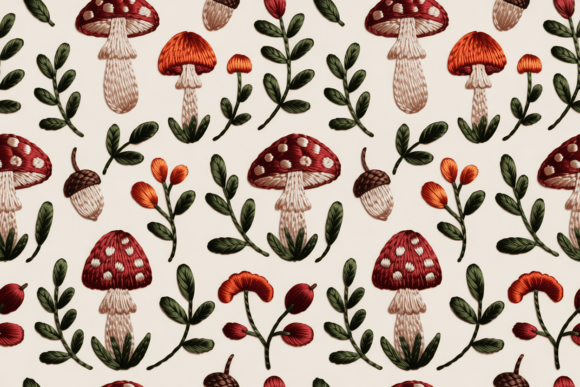
Review: Cottagecore Mushroom Embroidery PATTERN
As a designer who has spent countless hours digitizing and testing files for client work, I approach every new Cottagecore Mushroom Embroidery PATTERN with a mix of curiosity and skepticism. The cottagecore aesthetic has moved beyond a fleeting trend to become a staple in the handmade market, but not all designs translate well from screen to fabric. When I first opened this file, my immediate goal was to determine if it held up under the scrutiny of real-world production. Would it look crisp on a tote bag? Would the details get lost on a textured sweatshirt? This review breaks down the practical performance of this design for embroidery designers, Etsy sellers, and crafters looking to add high-quality assets to their shop.
First Impressions and Visual Mood
The initial visual impact of the Cottagecore Mushroom Embroidery PATTERN is warm and inviting. It captures that specific whimsical, earthy vibe that customers currently crave. The layout feels balanced, avoiding the cluttered look that plagues many low-quality graphics. For those of us working in Patterns and Graphics, we know that simplicity often reads better in thread than complex digital art. This design respects the limitations of the needle. The shapes are distinct, allowing the eye to travel smoothly across the motif without getting stuck on overly dense areas. It feels less like a generic clipart insertion and more like a thoughtful illustration designed specifically for textile application.
Real-World Application: The Tote Bag Test
To truly evaluate a design, you have to imagine it on a product. I visualized this pattern on a natural canvas tote bag, a bestseller for most small shop owners. The organic lines of the mushrooms complement the rougher texture of canvas beautifully. When stitching a tote bag design, clarity is king. Customers need to recognize the image from a few feet away. This pattern succeeds here because the separation between elements is clean. If I were producing this for a boutique, I would likely use earthy thread colors—moss greens, terracotta oranges, and cream whites—to enhance the natural feel. The design does not rely on tiny, fragile details that might snag or break during daily use, making it a reliable choice for functional items.
Apparel and Custom Gifts
Moving beyond accessories, I considered how this would perform as sweatshirt embroidery or on a fitted cap. On a fleece hoodie, the design needs enough substance to stand out against the plush fabric. The Cottagecore Mushroom Embroidery PATTERN appears to have sufficient body to avoid sinking into the pile of the fabric, provided the correct stabilizer is used. For custom apparel, placement is critical. This design works well centered on the chest or as a smaller accent on the sleeve. It also translates nicely to baby embroidery projects, such as onesies or nursery decor, where soft, non-aggressive imagery is preferred. The gentle curves and lack of sharp, aggressive angles make it suitable for sensitive skin applications, assuming soft threads are selected.
Technical Considerations for Stitching
While the aesthetic is strong, the technical execution is where many designs fail. Since the product description notes that a PNG is available, it is crucial to understand the implications for different users. For machine embroiderers, a PNG is typically used for reference or sublimation, not as a direct machine embroidery design file like PES or DST. If you are digitizing this yourself from the graphic, pay close attention to stitch density. Mushrooms can easily become too dense if filled incorrectly, leading to puckering. I recommend using a combination of fill stitch for the caps and satin stitch for the stems to create textural contrast. If you are using this as a printed transfer or sublimation, ensure the resolution is high enough to prevent pixelation on larger items.
For those converting this into an applique design, the clear outlines are a significant advantage. Applique reduces stitch count and adds a lovely fabric-on-fabric dimension that fits the cottagecore theme perfectly. However, always test your hoop size compatibility. Ensure the design fits within your standard 4x4 or 5x7 hoops without requiring excessive re-hooping, which can lead to alignment issues.
Fabric and Material Constraints
No design works everywhere. I advise caution when using this pattern on highly textured fabrics like heavy wool or very stretchy knits without proper stabilization. The fabric texture can distort fine lines. On dark fabrics, you must carefully select thread colors with high contrast. A common mistake is choosing threads that are too similar in value to the background, causing the design to disappear. Always run a test stitch on scrap fabric before committing to a final finished product. This is especially important for commercial embroidery where consistency and quality control directly impact brand reputation.
Where to Use Carefully
- Small Hoop Sizes: If scaling down for a pocket or cuff, ensure the smallest details do not merge together.
- Stretchy Fabric: Use cut-away stabilizer to prevent distortion over time.
- Dense Stitch Areas: Check for pull compensation to avoid fabric gathering.
- Curved Surfaces: On caps, ensure the design is centered and not too wide for the front panel.
Business Value and Customer Appeal
For the Etsy seller or craft business owner, the right design asset can elevate a brand. The Cottagecore Mushroom Embroidery PATTERN offers high "giftability." It appeals to buyers looking for personalized gifts, holiday embroidery items, or unique home decor. Using high-quality, well-thought-out designs builds customer trust. When a buyer sees clean stitching and a cohesive aesthetic, they perceive higher value. This design supports brand consistency for shops focusing on nature-inspired or whimsical themes. It is versatile enough to be used in printable mockup previews, helping you visualize the final product before you even stitch a single thread.
Practical Designer Notes
Before adding this to your library of design assets, take these practical steps:
- Verify File Usage: Confirm if the PNG is for manual digitizing, sublimation, or print-on-demand. It is not a ready-to-stitch embroidery file unless specified.
- Test Colorways: Create both light and dark versions to see which thread combinations pop best.
- Check Licensing: Always confirm the license terms for commercial use. Can you sell finished items? Can you resell the digital file? Clarity here protects your business.
- Stabilizer Selection: Match your stabilizer to your fabric. Tear-away for stable woven cottons, cut-away for knits.
- Mockup Testing: Place the design on digital mockups of various products to gauge scale and proportion.
In conclusion, the Cottagecore Mushroom Embroidery PATTERN is a strong contender for makers looking to tap into the enduring popularity of nature-inspired decor and apparel. It requires thoughtful execution regarding fabric choice and stabilization, but its visual appeal and versatility make it a valuable addition to any creative entrepreneur's toolkit. Whether you are creating a one-off embroidered patch or a line of small shop products, this design offers the charm and professionalism needed to engage buyers and stand out in a crowded market.